Trust and satisfaction are not soft brand values. They are the engine that decides who buys again, and repurchase is where the money is.
Most teams file trust and customer experience under brand. Nice to have, hard to measure, somebody else's budget. The data says the opposite. The experience a shopper has on their last purchase is the single clearest predictor of whether they buy again. And buying again is where social commerce actually makes its money.
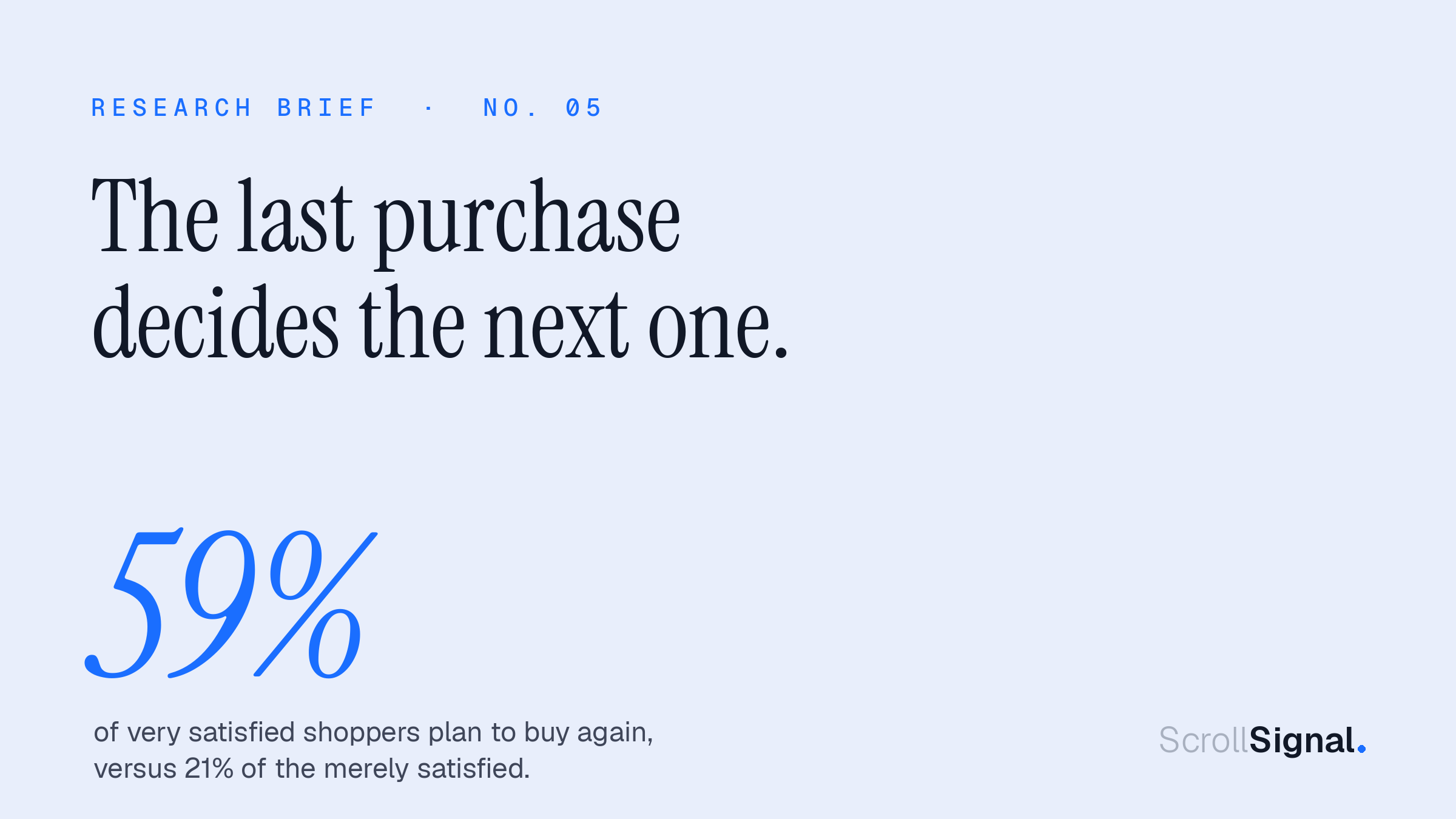
Shoppers who say they are very satisfied are nearly three times as likely to commit to buying again as those who are only somewhat satisfied: 59 percent against 21 percent. That is the steepest fall on the entire satisfaction ladder, a 38-point drop between "very" and "somewhat." Satisfaction is not a vanity metric. The gap between very and merely satisfied is the gap between a customer and a one-time buyer.
What the research found
The loop runs in one direction. Experience drives intent, intent drives spend, and spend is where the channel's growth concentrates.
Intent and spend move together. 62 percent of shoppers who are very likely to buy again spent $200 or more in six months, against 18 percent of neutral shoppers. Moving a shopper one step up the ladder, from somewhat likely to very likely, nearly doubles the share who spend over $200. The biggest revenue lever in the funnel is not acquiring another cold impulse. It is turning a satisfied buyer into a committed one.
And the growth is not coming from new, casual shoppers. It concentrates in the buyers who already spend the most and are already satisfied. The flywheel rewards the brands that earn repeat trust and starves the ones forever chasing the next first purchase.
Now connect the loop to what shoppers say they want. Asked in their own words what would most improve social shopping, 27 percent name trust, authenticity, and security, and only 8 percent name lower prices. The thing they ask for and the thing that brings them back are the same thing: confidence that the seller is real, the product is right, and the next purchase will go as well as the last.
Why this matters for your strategy
This reframes trust from a brand cost into the primary growth lever. Three implications follow.
Measure the experience, not just the sale. A completed checkout tells you the impulse worked. It tells you nothing about whether the customer comes back, and repurchase intent is what tracks spend. The last purchase is your best forecast of the next one, so the experience after "buy" deserves the attention you spend on the click before it.
Fix the operational breaks, because that is what trust is made of. When social shopping goes wrong, it is rarely a marketing problem. The failures are basic: a product that arrives much worse than expected, an item that is counterfeit or not as described, an order that never shows up. Trust is earned or lost in fulfillment, not in the caption.
Spend to retain, not only to acquire. If growth concentrates in shoppers who are already satisfied and already spending, an acquisition-only budget is fighting the data. The cheaper, more durable engine is the customer you already converted, kept happy enough to come back.
What to do about it
One reframe: treat trust and experience as your primary growth investment, not the soft layer on top of it.
Before the next campaign, ask which line on the plan improves the experience of the customer you already have. If the honest answer is none, you are buying first purchases and leaking the second ones. The brands that compound in social commerce are the ones that make the last purchase good enough to decide the next.
This is the imperative the whole report points to. Speed creates the first sale. Trust creates the business.
The full data, including the satisfaction-to-repurchase ladder, the spend-by-intent curve, and where the channel's growth actually concentrates, is in the Social Commerce Intelligence Report 2026. The free executive summary covers the headline findings. The full report (PDF) is available at three license tiers.
ScrollSignal is an independent B2B research firm publishing original consumer research on social commerce. No platform funding. No sponsored findings. Just the data.