When we started developing this research, I expected the data to confirm some assumptions and challenge others. Most research lands somewhere in that range. But a few of our findings genuinely surprised me.
Here are some highlights.
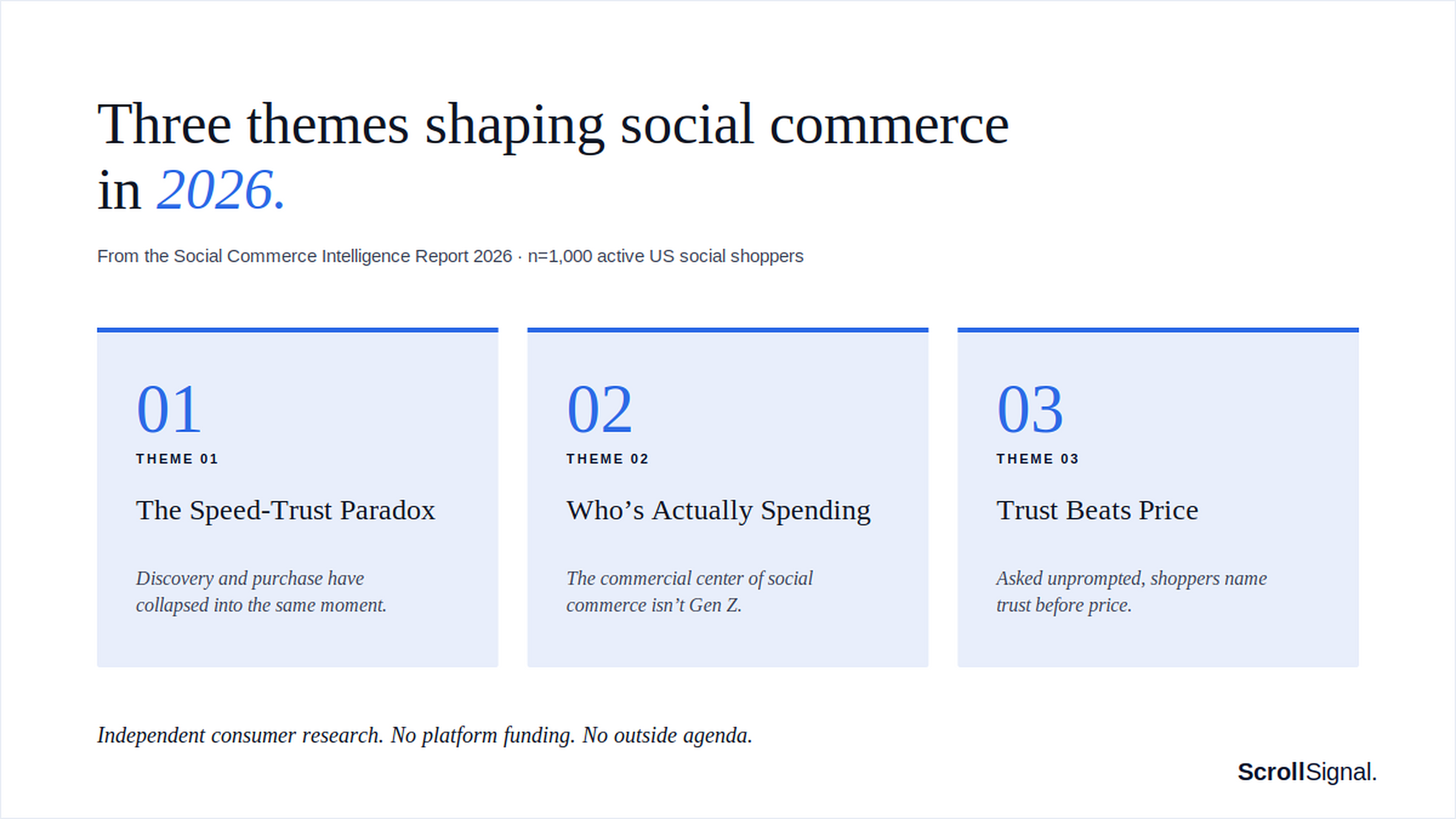
1. The funnel didn't get shorter. It collapsed.
73% of the social commerce purchases in our panel were unplanned. The product wasn't on anyone's list when the day started. They saw it. They bought it. And most of those purchases closed within hours of the first exposure, not days. Discovery and purchase have collapsed into the same moment.
2. The cohort everyone talks about isn't the cohort that's buying.
Every social commerce conversation starts with a slide on Gen Z. Time on TikTok, hours of creator content consumed, percent of purchase decisions influenced by short-form video. The slide is real. The behavior it describes is real. But on every commercial metric we measured, purchase frequency, total six-month spend, and intent to shop more, an older cohort leads. It turns out the 35 to 44 cohort is the commercial center of social commerce.
3. Shoppers aren't asking for lower prices. They're asking for trust.
We asked our panel a single open-ended question: in your own words, what would most improve your social commerce experience? No prompts. No answer choices. Just tell us. The leading theme was trust, authenticity, and security, named 27 percent of the time. Lower prices came fourth, at 8 percent.
I'll be sharing more about each of these three findings over the next few weeks. In the meantime, the free executive summary has the highlights, and the full report has the numbers, the cross-tabs, and the strategic implications.
How we did the research.
ScrollSignal surveyed 1,000 US shoppers aged 18–64 who made a purchase on TikTok, Instagram, Facebook, YouTube, or Pinterest in the past six months. More than half of all panel members screened did not qualify, so every finding reflects active social commerce shoppers, not casual browsers.
The study was fielded in April 2026 via an independent consumer research panel and stratified to US Census on age, gender, and region. All figures reported at the stratified level.